

Local health care: 60,000 unnecessary trips to access essential services
 Share
Share
By Kerry Hand.
Kerry Hand worked in the southern mental health services for many years and operated the successful Miramare agency. He had a close observation of the money flows and operations and the various interests that influenced them.
He writes regularly on health services in Central Otago/Southern Lakes, their lack, and how it could be solved. He believes health services should be easy to access and ordinary to use, and to achieve that requires wiser allocation of resources. He lives in rural Bannockburn.
Health New Zealand (HNZ) has a plan following a rapid and intensive project. Right now it’s with Minister Simeon Brown. He is considering the plan but as yet no date to release the report. ‘‘It will be released following Cabinet consideration in the coming weeks. ’’
Following years of neglect by the former Southern DHB, it’s exciting there is a chance for adequate health services with the establishment of the nation wide Health New Zealand.
But even if Mr Brown makes the right decisions, the forces of resistance are strong. From existing facilities concerned about survival through to properties developed by entrepreneurs that must be viable, but may not be the right thing for the most people. And not least the resistance out of Dunedin who see any shift of resource as a cut. (it isn’t, it’s a relocation) And the health unions. And locally the tendency of our four major towns to go it alone, and see the others as competition.
-
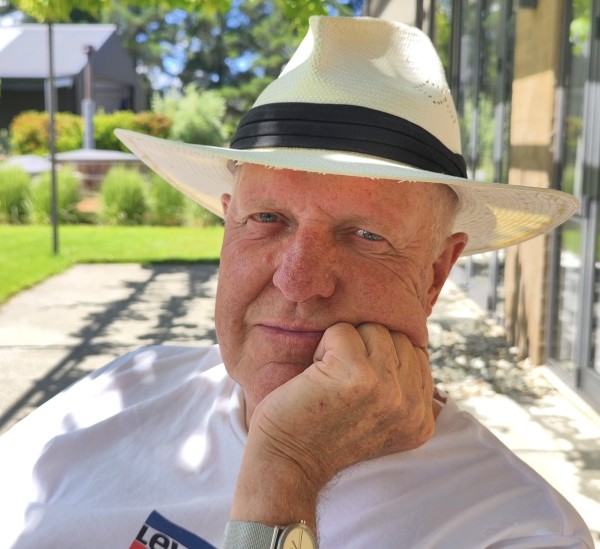
Kerry Hand - an experienced Otago public health commentator
Money rules of course, new money is hard to come by. Relocation of existing resource into the area is quite realistic, creating reaction claiming to be in the public interest. Often it isn’t.
When a senior Health New Zealand (HNZ) official talks like this, I take serious notice.
“…......... When I started to work here in Southern, I’m like, holy heck, how did that happen? Because there are just a mishmash of ... bespoke things, and patchwork, and band-aiding,”........“many rural health services had operated on the smell of an oily rag for a long time and nonsensical problems needed to be fixed.........” She said one good thing about being new to her role with Southern HNZ was that she was looking at everything with fresh eyes.
I worked decades close to the Southern DHB, and thats the best description I have seen. But with a new crew from HNZ on the job, finally there is some hope for Central Otago Queenstown Lakes.
Another planner, confirmed the current process is operating under strict time pressure from Health Minister Simeon Brown. The minister has “really leaned into this”, demanding a set of options and advice be on his desk before Christmas.
What is the problem here in Central Otago Queenstown Lakes? Well just about everything really, Problems created by our ballooning population, against minimal specialist health services. A reality the former Southern DHB failed to recognise.
Rachel Haggerty, Health New Zealand’s national director of strategy, planning and performance also said “We’ve identified...about 60,000 travel events that shouldn’t be happening when people are having to drive to Dunedin or Invercargill,” Rachel said.
She described the reality for many locals - driving hours for a 10-minute appointment or a simple diagnostic test - as a failure of localised service delivery. “10 minutes in a room, half an hour...in a waiting room, and you go, ‘Why did I do that? Was that worth it?’”
The neglect has been massive in my own specialty of Mental Health. Which is just a small section of the bigger picture. In 2023 I wrote about it in https://crux.org.nz/crux-news/mental-health-move-staff-from-dunedin-to-central-otago-and-southern-lakes/ These are numbers they refuse to update.
Here is the summary: In the Dunedin area there is one community mental health staff member for every 443 people, while in the Central Otago-Queenstown Lakes area there is one community mental health staff member for every 2,884 people. That’s out of kilter by more than six to one. It’s an extraordinary postcode mismatch. These are community staff only, not ward staff.
Figures supplied by the the former Southern DHB showed it directly employs 335 community health staff in Otago. It’s a powerhouse of resource - nurses, doctors and others - bigger than many nationally known companies. Strangely, it allocates only about 26 of community mental health staff to Central Otago and Queenstown Lakes. With an equitable redistribution of the 335 existing staff that number should be 101 not 26. In Dunedin, it allocates 294 community mental health staff, when an equitable distribution says it should be 176.
The answer? Transfer 75 staff positions - nurses, doctors and others, out of Dunedin into Central Otago and Queenstown Lakes..........”
Another issue is Maternity : Having a baby in Central Otago Queenstown Lakes. At birth things can turn on a dime, yes caesareans, and then it’s helicopter. Far to many helicopters for an ordinary life event. Many choose to move out of the area for a few weeks. With 700 births a year, rising to 1000, that’s simply ridiculous.
With the new nationally based HNZ change is possible. Don’t expect a radical transformation, but more likely a build to something adequate.
So what are the challenges:
First up we have private developers with investors wanting to rent to the government. But that creates a problem sometimes called anchoring. The risk of warping the regional health plan simply to fit around a private developer’s pitch. Property developments are not the way to set up health services. Not the way to determine what happens. But they can be useful following – only after following – an analysis of the public need
Private entrepreneurs have to meet a lot or realities, so often become focused on specific services. And those don’t align with peoples need for broad based multi capability public services.
Mike Saegers “Health Precinct” in Wanaka is magnificent and it will be useful. The various buildings will be good venues for private companies such as GPs and medical specialists. Even some public community services might lease a place there. A smaller but similar facility was proposed by James Reid and Family.
The “Regional Deal’, potentially money from the government for the area, and largely being negotiated in secret, seems to have excited interest amongst the property people. Maybe they see a subsidy.
There was a report from what is now the Southern Health Trust which seems to be funded from somewhere, and somehow associated with the Southern Infrastructure. Southern Infrastructure seeks to connect investors with public infrastructure. It is involved with the Queenstown Gondola.
Their early effort advertised about building the “Queenstown Hospital” but they have backed off that now. The next suggestion was a scattering of services in different towns. Described as ‘centers of excellence’ but one need to be dubious of that given that each would not have the capacity to adapt rapidly to different situations.
Caesarians, described under “secondary maternity care” are a useful way to explain the need for a single strong facility with public services for the whole area. It costs because you need specialists, including Anaesthetists. Available 24 hours a day seven days a week. That takes a lot of people and is eye watering expensive. Along with all the other supports including post operative care.
But once you have that presence it can be built on. It becomes multi purpose. An emergency department that does not rely so much on helicopters. Definitely few helicopters. More elective operations but with the capacity to deal with the changeable and unpredictable. The presence of specialists who can provide outpatient clinics. Intensive care. The point about such a facility is it needs to be mutually supporting capacity so needs to be in one place. And once specialities are in place, they provide for non hospital needs as well.
So. Watch this space. When and if an announcement is made there will be numerous press releases and commentary. Better sometimes to think more about who is speaking than what they are saying. Look closely to see whose interest is really served.
We await that plan. If there is one it needs to be about the 80,000 people of Central Otago Queenstown Lakes and put them first.


TOP STORIES