



Shane Jones shut down NZ involvement in fossil fuel reduction plan
 Share
Share
By Kate Newton of RNZ.
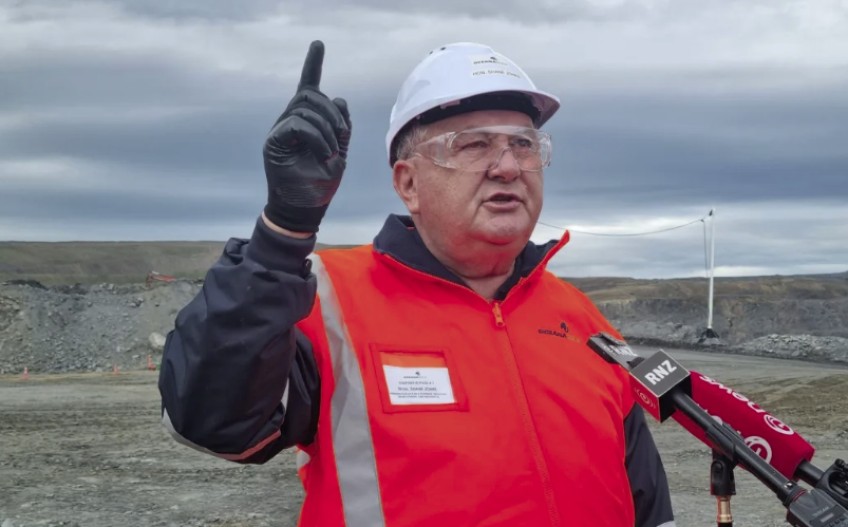
Resources Minister Shane Jones shut down the possibility of New Zealand signing up to a 'road map' away from fossil fuels at the annual global climate summit, documents reveal.
Opposition MPs say the documents underscore the disproportionate influence that National's minor coalition partners wield over government policy.
But Climate Change Minister Simon Watts said it was "appropriate" to consult Jones because of his portfolios.
Australia, the UK, the European Union and a group of Pacific nations were among 80 countries pushing for a 'road map' to be included in the formal negotiations at COP30 in Brazil last November.
They were unsuccessful, but Australia and several Pacific nations were among 24 nations that signed the Belém Declaration on the Transition away from Fossil Fuels on the final day of the summit.
Documents released to RNZ under the Official Information Act show New Zealand's negotiating team was also considering signing the declaration - before officials back in New Zealand informed them that Jones did not want them to.
Earlier, a copy of a 'decision submission' was sent to New Zealand's climate ambassador Stuart Horne to share with Climate Change Minister Simon Watts, who was at COP30 with Horne and the rest of the negotiating team.
In the submission, senior foreign affairs officials said the declaration "does not conflict or compromise New Zealand policy settings".
"It is consistent with the COP28 outcome regarding the transition away from fossil fuels which Parties, including New Zealand, agreed to."
An assessment against government priorities found that signing up to the declaration would have a neutral or even positive effect.
While drafting the submission, officials noted there was "an open question about engaging Minister Jones for concurrence, consultation, or information".
The final submission was sent to Jones for consultation.
It was also sent to Trade Minister Todd McClay, but for information only - his input was not sought.
An email sent the next day said Jones had been consulted.
"Minister Jones does not want New Zealand to join the Declaration," a Ministry for Foreign Affairs official informed his colleagues.
"We have shared this information with the team supporting Minister Watts in Belem."
That was the last email in the chain released to RNZ.
Climate Change Minister Simon Watts led New Zealand's delegation to COP30. Photo: RNZ / Samuel Rillstone
Green Party MP Francisco Hernandez, who attended COP30, said the government's agenda "seems to be driven so much by the need to appease New Zealand First".
"Why are they even talking to Shane Jones? He doesn't have a climate portfolio - why does it require sign-off from him?"
National was giving its junior coalition partner too much power, Hernandez said.
"It's for consultation, but it does very much read like they've effectively taken what Jones has said and used it as an indication of a veto."
Hernandez got the impression while he was at COP30 that the New Zealand delegation had been "very much on the fence" about signing up to the declaration.
"It seemed to be a finely balanced thing and I feel like [Jones' view] ended up being a decisive factor."
In a written statement, Simon Watts said it was "appropriate" to consult Jones because of his resources and associate energy portfolios.
Watts did not directly reply to a question about his own stance on the declaration.
"New Zealand did not join the declaration at COP30 but as I have previously signalled, the Government continues to support the COP28 agreement to transition away from fossil fuels," he said.
"We're contributing to that, for example, through our work to double renewable energy."
Labour Party climate spokesperson Deborah Russell, who attended COP30 alongside Watts, said there was "no reason" not to sign the declaration.
"It's consistent with what we signed up to at COP28 and all it did was ask for a road map for getting out of fossil fuels - what's the problem with that?"
It was fine for officials to consult Jones, she said.
"The problem is that the reason we didn't sign it, seemingly against officials' advice, was because Shane Jones said he didn't agree to it."
Russell said it was clear that government inaction on climate change was coming from the minor coalition parties.
"Shane Jones has been very pro the extraction of fossil fuels. [So] this is unsurprising given his position on that; it's nevertheless very disappointing."
Jones told RNZ that "lofty agreements" like the declaration were "conceived in milk-fed politics that are vastly different from my earthy, pragmatic approach".
"I don't see a future for New Zealand if we deny ourselves access to fossil fuels," he said.
The country's current energy system had to be shored up - including with imported and domestic coal - while geothermal energy and potentially more hydroelectricity was opened up, he said.
"New Zealand has a plan, however, it's going to take a lot longer than most activists believe."


TOP STORIES