

QLDC councillor Matt Wong: "We need fairer funding tools."
 Share
Share
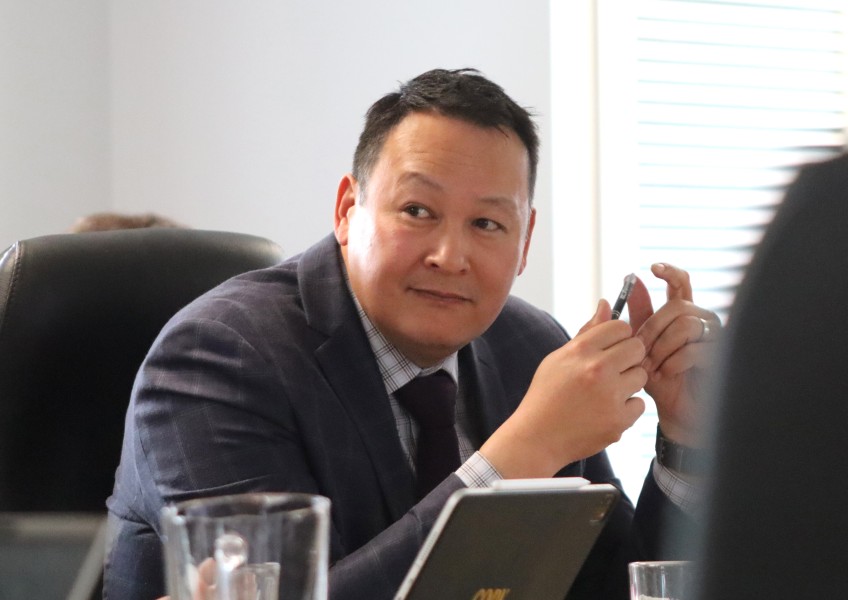
From Councillor Matt Wong (owner of iFly) - in reply to Ralph Hanan's recent letter.
"Tough ask to make a short comment on Ralph's letter as it raises big important issues for our district, and many of his concerns and solutions are shared by elected members. I’ll touch on the key points he raises, but a shorter comment can’t do full justice to the nuance, or current environment that local government deals with.
Queenstown Lakes District GDP outperforms the national average, aside from the covid border-closure period. Our tourism and hospitality sector remains the most productive in the country for this sector and still very important to the local and national economy.
While tourism isn’t the most productive sector it preforms better than average across NZ, provides entry-level jobs for youth, builds real career pathways, and attracts skilled talent, founders, and investors who often start as visitors before choosing to put down roots and do business here. Economic diversification isn’t a choice between tourism or something else - it’s tourism and the new sectors building alongside it.
Tourism is crucial to both our district and the national economy, and while Council supports the economic diversification ecosystem, private capital ultimately determines where investment lands. When major industries consider whether they can operate here, the decision often hinges on robust core and social infrastructure, talent pipelines, and essential services for staff to migrate here. Much of this is controlled by Central Government
Our infrastructure pressures are real, but they stem largely from decades of underestimated population forecasts produced by Stats NZ and over-reliance by government agencies to budget and plan long term investment in highways, hospitals, schools, and public services. A fact often overlooked in commentary, but the data underpinning government investment were under cooked, and many were further reduced by successive government budget cuts or prioritised investment where there is greater voter population base.
QLDC now face a suite of national reforms and mandates, including Fast Tracks, Water Services delivery, Urban Intensification, Rates Caps, and RMA changes, which may work for the average NZ district but not a high growth, highly desirable, under invested district, and these sweeping changes may accelerate infrastructure stress, weaken safeguards built into our district and spatial plans, and still provide no new funding options, or offers big central government investment to catch up on high growth infrastructure demands.
Our local visitor economy alone generates around $550m in GST each year, yet only a fraction returns to the district at a scale that matches the pressures and national economic benefits tourism creates. Rates alone can’t carry that burden, and any new visitor funding mechanism requires legislative change from Wellington. Our challenges are distinctive, and no council can solve them alone.
That’s why we continue to advocate for fairer funding tools, greater flexibility for the country’s highest-growth district, and planning frameworks that reflect what’s actually happening on the ground. To solve this we must match growth with proper government infrastructure investment and real-world data. This is also why getting a Regional Deal matters so much."


TOP STORIES