


NZ Post degrades local Queenstown services after paying $100 million Government dividend
 Share
Share
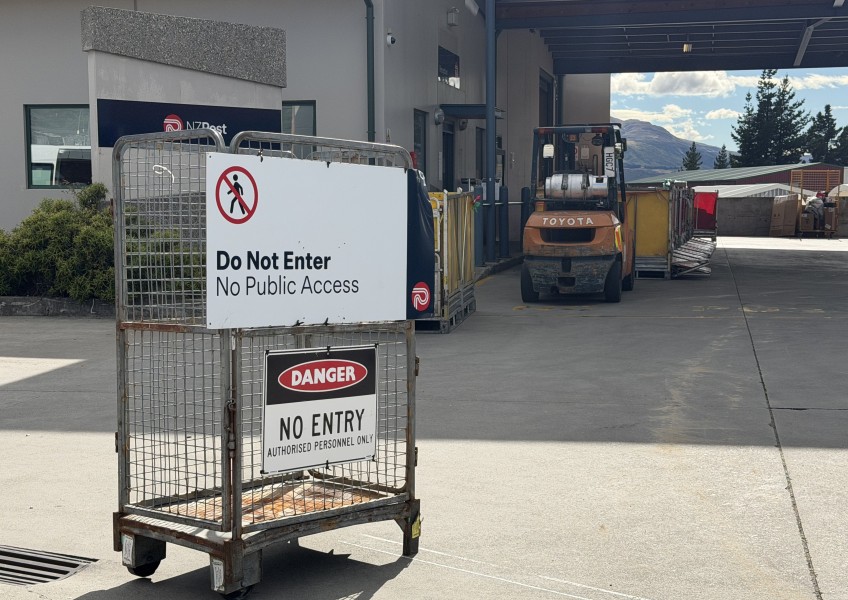
Crux is investigating an overall degradation of NZ Post services across the Southern Lakes and Queenstown in particular. As one of the fastest growing population centres in the Southern Hemisphere we don’t even have a Post Office and many subdivisions don’t receive postal or courier deliveries at all. Simon Edmunds is the Otago Southland organiser of the Unite Union & Postal Workers Union Aotearoa and he explains in this feature length interview where he believes everything has gone wrong - and will get worse in the future unless current strategies are reversed. Crux has approached both NZ Post and the Government for comment.
Crux: Is it factually correct that our local Southern Lakes postal services have been in decline?
Simon Edmunds: Well, look, there’s a lot going on here. Yes there’s definitely been over the past decade quite a significant reduction of services. Obviously we’re seeing things like a huge reduction in post boxes nationally, we’re seeing the destruction of the Fast Post service and the move to only courier services if you want the faster delivery.
We’re also seeing something that our, that our members are worried about, particularly here, is that so many of the new subdivisions do not actually have letter boxes and don’t have the ability for courier packages and mail to be delivered to them.
This causes a lot of concern amongst our customers, but also the posties themselves. They are worried that basically the New Zealand Post services are being run down over time, and they feel that this is something that New Zealand Post management should have fought harder to maintain a high quality service, but does not seem particularly interested in doing so.”

-
Simon Edmunds: Otago/Southland organiser of the Unite Union & Postal Workers Union Aotearoa
Crux: Quentin Smith, the deputy mayor, has commented on Facebook that he felt some sympathy for NZ Post and his logic was: “why should they expand a loss making service?” He was talking about postal/letter mail as opposed to courier items saying he doesn’t need letters anymore. So if NZ post is losing money, what would make them improve or expand?
Simon Edmunds: “There’s no denying, and none of the postal services unions have denied this, by the way. There is no denying that over time there’s been quite a dramatic decline in letter mail volume. However, there are some figures used by New Zealand Post that we feel are misleading about that, for instance they ignore the fact that many of their competitors are are delivering more letters. But look over time there is a declining volume of letter mail - that’s absolutely happening.
However, we are seeing an expansion of postal/courier delivery as more and more shopping takes place online. So New Zealand Post talks about their courier service being profitable. That’s really their focus and really they want to get rid of a lot of their letter delivery services. Now, Quentin Smith’s idea that people don’t get letters anymore - I don’t really agree with that. Examples are parking enforcement notices, local voting papers, hospital appointment letters and even vital health items like bowel cancer screening kits.
There are also those who are less comfortable with an online life, particularly the elderly, but also anyone who, who for whatever reason may not have internet access or may not have strong English language abilities. They very much still rely on letters.
Crux: Why cant NZ Post manage the switch from letters to courier deliveries in a more efficient way?
Simon Edmunds: “New Zealand Post basically want to disestablish all 750 posties. So get rid of the posties, get rid of the letter part of the business and move it all in into couriers. But more importantly, not just couriers who are employed by New Zealand Post, but contract couriers without employment rights, like minimum wage, et cetera, et cetera.
“So in terms of poor management, we are really, really concerned that what they already acknowledge as a profitable part of their business is actually being turned over into a contracting service where there is huge potential for exploitation and inefficiency. Some of our existing contractors basically tell us they don’t want to deliver mail.”
“We know that when contract couriers don’t actually want to do something, they tend to either do it badly or not do it at all. And so the risk is that if contract couriers are given all of our letter mail to deliver, it will actually further degrade the service. New Zealand Post is putting more and more of the responsibilities of actually monitoring these things onto these, what they call, “multi-run business partners.”
“These are the contract couriers that are themselves, employers and themselves employ a whole bunch of couriers beneath them. So that’s things like complying with employment laws, setting up routes and drivers, providing annual leave, sick leave even dealing with customer and staff complaints. We know that there are huge problems here also with exploitation and in particular migrant exploitation, which in Queenstown is something we are very well aware of as a migrant driven place. More and more of the couriers are already migrant workers. We know from a recent Chorus study that companies with subcontracted workforces are particularly vulnerable to the risk of labour and migrant exploitation in their supply chains.
“So what we’ve argued is that we do need to move from two separate services, post and the parcel, and combine them into one, but there’s no reason why existing delivery agents, so that’s the existing posties we’re already trained to also deliver parcels, couldn’t actually be part of that.”
Crux: Is there also a social aspect to postal and courier deliveries?
Simon Edmunds: “Many of our posties has brought this up in their various consultations. For many people that they see on their rounds, and this is especially so for the elderly, they might be the only person they talked to that day. And so that person to person contact is incredibly important. Um, so yes, I agree with that.
Crux: Is there any issue with trying to turn the NZ Post delivery systems into external contractor systems - in that organisations like Uber have recently been found by the courts to have employees rather than contractors - in spite of their attempts to structure things so as to avoid many of the costs and obligations of an employer?
Simon Edmunds: Absolutely. We have two cases going through the courts as a union. One is challenging the nature of these contractors because we feel that they are employees, they don’t have the freedoms that contractors are supposed to have. Our court case is in progress around that. We are very confident about that partly because of the recent results from the Uber cases. The other is challenging the process as unfair because they haven’t adequately considered options that actually retain their workforce as employees rather than contractors. But it’s very clear that the government is considering changing these laws around contracting.
Crux: Is NZ Post actually short of cash and making a loss?
Simon Edmunds: Just over a year ago, in 2024, there was a hundred million dollar payment extracted out of New Zealand post back to the government. So while they’re talking about profitability and the need to maintain profitability, at the same time these extra profits are being sucked out of the postal service by the government. It was a special cash dividend to the government of a hundred million dollars in May, 2024. How does that fit with the narrative of profitability if at the same time as the service being run down, the Government is expecting such vast amounts from them?
Crux will publish the responses from NZ Post and the Government as soon as they are received.


TOP STORIES