

Mayor John Glover's full reply to local economist Ralph Hanan
 Share
Share
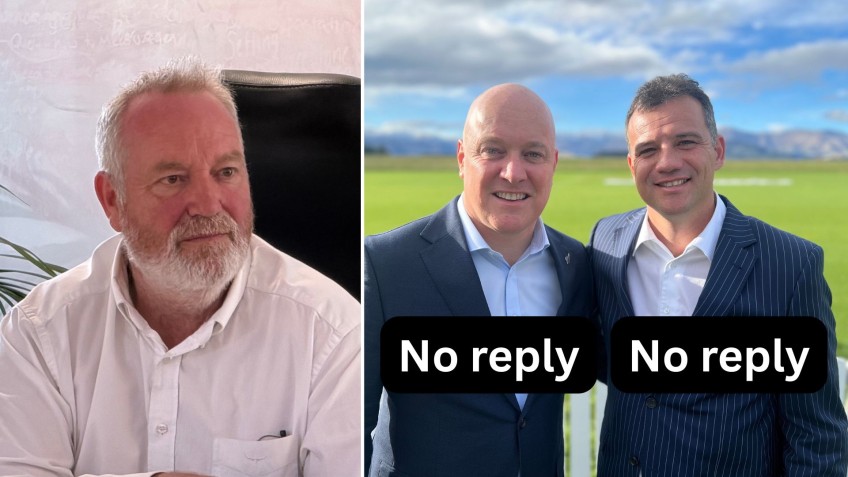
Crux published a detailed letter to Mayor John Glover and QLDC councillors last week from local economist Ralph Hanan. Here’s John Glover’s reply on behalf of the council. A request for comment sent to Prime Minister Christopher Luxon and to local MP Joseph Mooney were both ignored.
Dear Ralph,
Thank you for your letter to us, your elected representatives. I acknowledge and respect the considered world view and your prior life experience that underlies your concern.
I share your concerns, they are real and are adversely impacting the day-to-day life of our communities. And we do need to deal with them. If we don’t, I see a slow-motion train wreck happening for our community and our economy.
But let’s be clear, there is no one simple answer and it’s likely to get worse before it gets better.
Growth
I campaigned on a ‘smart growth’ platform. To me this means basically having a 50 year forward view of what the district will realistically look like down the track and making sure we have a plan that ensures water provision and wastewater treatment, transport, energy, education, health and community facilities are all delivered in line with growth.
We can’t stop growth, but I believe we can and should be able to manage and shape it. But often we don’t want to talk about it because we find change confronting on a personal level.
I am concerned about the clear gap between the rate of consenting development and Councils’ ability to service that development. We cannot simply refuse to consent development and when our planners conclude a particular scheme is not appropriate, more often than not a lengthy and expensive court battle decides otherwise. We also have a very permissive planning system that takes no account of community aspirations to deliver, for example good urban design (even if we agreed what that looked like).
A previous handbrake on development has been Councils’ ability to provide water and wastewater supplies to new subdivisions. Now we are seeing the private sector planning to provide their own. At the margins, such as at Hawea, Council are not approving consents requiring additional wastewater connections until our ability to service new demand is achieved.
As to whether we get good value for the infrastructure we pay for, I consider we do need to review that. As a country NZ spends some of the highest amounts per head of population on infrastructure compared to the usual basket of other countries, but gets the least output for that spend. There will be sector wide aspects to that as well as how we procure locally and what competition exists or is encouraged to exist in the market. Perhaps this is a nationwide conversation that we should lead locally.
The question of how effective our wastewater treatment plants are managed and operated is also one that needs be addressed. I, along with a good number of councillors are concerned that our regulator has had to take enforcement action in respect of these and we need to understand if there are any underlying causes to the symptoms that we see.
Governance
Of course, our job of shaping growth just got a lot harder on Tuesday as the government introduced a whole new, even more permissive planning system that consigns to the bin everything that has been decided by extensive community involvement and court decisions over the last 20 years.
Our government firmly believes fast track is a success and as a result that process is not going to go away any time soon.
New legislation means that what areas councils are currently allowed to spend money on will be more constrained in future.
And government is now requiring your local councils to spend time and effort re-organising themselves, taking on more work but with less resources and a rate capping regime that will likely remove our ability to fund most of the aspects of local government that our communities value.
So, what is the future of local government? Probably we end up as a local delivery organisation where all direction is set by central government with no discretionary spend and virtually no ability for local decision making. Are we turkeys cooking ourselves for Christmas? Quite possibly.
Economy
The low wage/low productivity of the tourism sector is well known as is its heavy use of resources. If we were starting from scratch, we’d never choose tourism as a base for an economy.
But we cannot get away from the fact that our district is fundamentally a tourist destination and that is always going to be what underpins our economy and it is also why so many of us have ended up living here in the first place. Of course, it is well known there are consequences arising from and risks associated with (think covid) being dependant on a visitor economy so I share the desire to minimise the impacts and risks.
You will know that under the previous government there was a sector led initiative to develop a tourism industry transformation plan and increase productivity, skills and careers, but a change of government halted that work. Meanwhile, regional initiatives such as the Southern Way aim to reduce the load locally and spread tourists across the wider region. And our local regional tourism organisation is focussed on gaining more value with lower impact from our visitors.
Housing
I love the Aspen model that used a local city property sales tax 30 years ago to enable the city to purchase and retain a significant housing stock for rental. I’d love to have a local sales tax but there’s no way any government is going to give us that option. We do have the housing trust with a model that works, we are seeing the likes of Simplicity wanting to build high-density long-term rental solutions and of course local businesses are increasingly realising they need to provide accommodation if they want to have a secure workforce.
Opportunities for the future
So how, do we have any hope of a better future? We need to look for any opportunity to shift the dial and make a difference. We need to be able to respect but influence government actions. Participate in, rather than be overtaken by change. Be open to working with those who can solve problems we can’t solve by ourselves.
Rate capping. The opportunity here is that it will drive us to show value for money, effective management of our assets, make sure that growth does pay its fair share and require us to have clear direction from our communities on what we do. There are many people, like yourself, in the district that want to help us have the conversations needed to achieve this and I look forward to enabling them.
Regional Planning. We are going to have to produce region wide ‘district plans’ so let’s get community, business and developers into the room to agree the foundational outcomes that are needed to support these.
Regional reorganisation. Sometimes we keep on doing what we do because we don’t want to change. If we have to reorganise councils regionally, let’s throw everything in the pot. Could economic development be a regional function? Likewise tourism marketing and management. Empowered and effective regional transport planning delivery. Just a couple that come to mind.
Regional deal. An immediate opportunity to work with government around specific actions that we know will make a difference. None of these are new concepts but the ‘deal’ framework enables the pack of cards to be shuffled, and the right players bought to the table and accelerate the long game. Eg a strategy to plan and deliver transport projects, a raft of initiatives that could shift the dial on our economy, use new development to supply homes for the housing trust, consider how visitors pay for the impact on our community. Who else can fund the infrastructure we need locally?
Advocacy. I’m more than happy to go to Wellington and represent our district and perhaps should invite myself in the new year.
If the PM was to ask me what are the top 3 things he could do for our district, I’d suggest:-
1 Recognise there is more to growth than carving up land for houses. We are doing that already and have enough already zoned for the next 30 years. Doing things quickly and in isolation brings huge risks of societal disfunction. There needs to be a coordinated long term strategic regional plan that locks in the (governments’) delivery of transport, health, and education needs in tandem with residential or commercial development. Think of it as a business plan. Not sexy, but absolutely essential. One plan to rule them all and we’re very keen to collaborate and get that moving.
2 Recognise that we can’t meet governments’ aspirations to grow the value of the tourism economy without funding. For example, as a rate capped council we won’t be able to afford to fix the roads that lead to the national parks because only 6 people live there but hundreds of thousands of visitors travel here to use those roads. We do need new funding streams. We have a destination management plan that will deliver significant outcomes, but there is a cost to delivering the plan that we can’t meet.
3 Understand that unless we get 1 and 2 sorted we all lose.
In conclusion, and well done for reading this far, I understand the angst, the impacts on community and environment, our quality of life and the feelings that these bring. Your councillors and myself experience these on a day-to-day basis, are not immune to them and are united in wanting to make a difference. We look forward to the journey into some very uncertain times but with a clear focus on the opportunities that uncertainty and change brings.
Have a wonderful Christmas, and thanks again for caring.
John Glover
10 December 2025


TOP STORIES