

Economist: Queenstown congestion "economically, socially and environmentally perverse."
 Share
Share
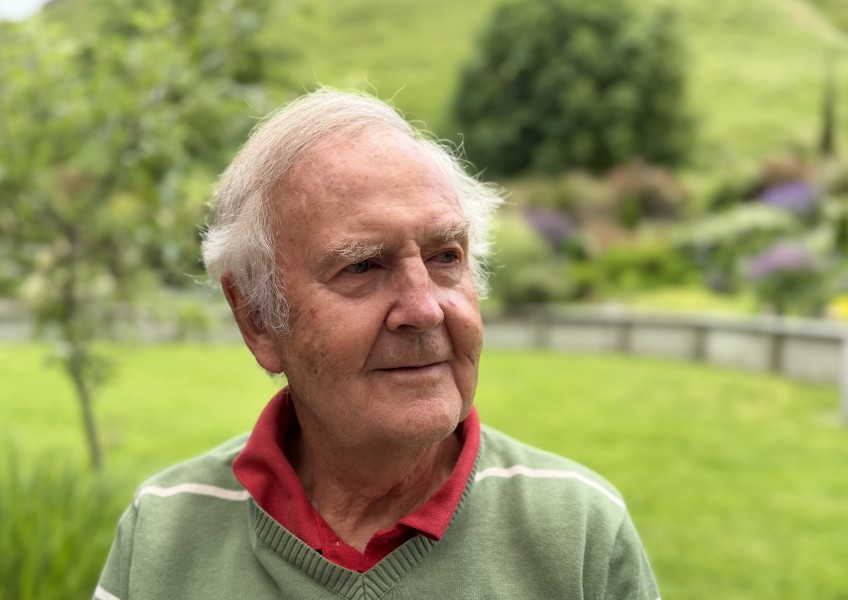
Ralph Hanan is a former World Bank economist, now based in Queenstown, Los Angeles and Washington DC, with experience across a wide range of complex local and global economic situations. Crux asked Mr Hanan for his take on recent data that highlights the increasing inadequacy of our Southern Lakes planning, productivity and infrastructure decisions - or lack of them. He has responded with this open letter to the QLDC Mayor and Councillors. Crux has asked for the Mayor and Councillors to share their responses with us by the end of next week.
Ralph Hanan. An Open Letter to QLDC’s Mayor Glover and Councillors
Looking beyond our frustrations from the excessive and disjointed growth cast on our community by QLDC, I see three basic, at-root issues that our mayor and councillors should address to help lead a structural reset for our Lakes District. They concern our economic performance, our governance, and the availability and affordability of housing for our wage and salaried workers.
Our Economic Performance
New Zealand’s productivity, as assessed by value-added per worker or per hour of work, is at the lower end of the OECD countries. For our country as a whole, reports from NZIER, Infometrics, the NZ Initiative, and the former Productivity Commission, as well as media commentators, have recommended policies to increase our productivity. Yet politicians have been tardy to implement many of the recommendations.
Fundamentally, higher productivity derives from greater investment in our infrastructure (including digital infrastructure), education, and health services, as well as from the quality of management, scale, branding, and so forth. These investments take a lot longer to present sustainable outcomes than promoting an increase in tourism. It is in the nature of our politicians that they favour solutions yielding quick results in the short term rather than more substantial outcomes over the long run!
Regarding our Lakes District’s economy, our gross domestic product (GDP) per capita and our growth of GDP per capita have lagged for several years at 12-15% below the average for New Zealand as a whole. With our local economy based largely on tourism, this performance is no accident. Tourism is a labour-intensive activity. It provides limited opportunities to substitute capital for labour, to make our labour more productive (increasing the ratio of capital to labour) and to scale up capital investment. Higher productivity in our local economy is essential if we are to raise the incomes of those who produce value in our community, our salaried and wage workers. Their higher productivity is essential also to redress the income inequality and raise the overall living standards in our community.
We may note that in the recent debates for QLDC mayor and councillors little attention was given to our District’s lagging economic performance. That said, I would not want to detract from the attention candidates gave to the evident need for greater transparency and less disinformative spin from QLDC generally, and especially from some of the administration’s senior staff.
Tourism, and particularly mass tourism, does little to increase our district’s productivity. It is unfortunate that the Government has been pushing an increase in tourism as a national priority. Many of these tourists will come to Queenstown, encouraging further investment of scarce resources in low-productivity tourism enterprise and new residential housing.
I should point out that investment in housing is not a productive expenditure. Houses (other than rental property) don’t produce anything, they don’t add value to our economy as goods and services for sale. Once constructed, they provide shelter, which is a form of consumption. Also, speculative investment in land and housing for capital gain does nothing to increase productivity.
For years QLDC has included in its district plans the importance of diversifying our District’s economy but has not followed through with policies that would bring such transformation about. The numbers of tourists and our residents have increased at a faster rate than our district’s total economic output (our GDP). While this has led to growth of our local economy, it has not led to commensurate growth of incomes at the personal level - per capita. (Data from Infometrics, used by QLDC, bears this out.) Many of our wage and salaried workers are doing it hard in Queenstown - it’s expensive and tough to make ends meet - and by continuing with QLDC’s traditional focus on expanding tourism they are unlikely to fare better.
Our Council, as a matter of policy, should embrace and really get behind a new economic model, one whereby investors direct their resources to diversified, higher productivity enterprise, especially for opportunities in the knowledge and tech sectors. More effective collaboration with central Government to accelerate investments in our infrastructure, and education and health services must go hand in hand with QLDC’s solutions.
I acknowledge the initiatives of Technology Queenstown and recently Otago University’s intent to establish a student campus in Queenstown. While these initiatives are well taken, they fall short of possibilities to attract a world-leading university to Queenstown such as an affiliation with Stanford University or the National University of Singapore. [World rankings of universities by the U.S. News & World Report and the UK’s Times Higher Education place Otago University at Nos. 296 and 351, respectively.]
Our Governance
For NZ as a whole, there has been an increasing centralisation over the years of governance on Wellington. Central government has stripped territorial authorities of certain prerogatives to decide on local priorities. For QLDC, this issue has reared its head recently with the Government’s Fast Track legislation. While this legislation may be desirable for some districts in the country, its application for proposed residential developments in our District is absurd. One shoe does not fit all. To wit, how could the Minister of Environment approve Fast Track for the Ladies Mile development when there was an immediate, and remains, a publicised issue about the mal-functioning and capacity of our sewage treatment facility? Was the minister not made aware of this and other deficits in our infrastructure?
The capacity of our public infrastructure - roads and utilities - is glaringly inadequate for the consented new residential developments and for those planned. QLDC has failed miserably at addressing this incongruence. It appears that QLDC’s administration is sometimes in cahoots with developers to consent more developments than our infrastructure can possibly cope with. The congestion on our main arterial roads is economically, socially, and environmentally perverse. Time is money. Transporters take longer to make their deliveries, limiting their turnaround time, local businesses are impacted by delays and the increased costs of their deliveries, and workers take longer to get to their places of employment. Similarly, residents become frustrated as they attempt to get to appointments or get their kids to school on time, or to the airport for their flights. Not to mention the added pollution from vehicles stuck in traffic. Our residents did not sign up for this. By several measures, QLDC’s capability to plan for our orderly urban development is abysmal.
Some people in authority have commented that the excessive numbers of residents and tourists against our constrained infrastructure derives from provisions of the RMA and the preference it gives to private sector interests (land owners and developers) over the public interest. To my mind, that reasoning falls short. We are a community with collective desires and responsibilities, wishing to promote our communal wellbeing. We should be able to rely on QLDC - our elected councillors and the administration - to enhance the quality of our living experience while sustaining our natural environment. If the RMA (and Fast Track) is not fit for purpose in our local context, then QLDC, supported by our local Member of Parliament, should demand relief from central Government. If in the event Government is not forthcoming, QLDC, supported by local organizations, should go the route of public protests, with full exposure to the media. The future of the place we call home is at stake. Our new mayor in his interactions with Government should not take No for an answer.
Our infrastructure deficit has become so absurd that QLDC should resolve promptly to issue no more greenfield development consents until the deficits are rectified. That may take a few years, but so be it. Meanwhile, QLDC should give clear preference in its planning to greater density of our housing, especially multi-story housing, within our urban areas. That makes for good economics too.
QLDC’s fiscal situation remains a major issue. As we well know, the ratings base of our residents and businesses falls far short of the funding required to maintain and replace our existing and often aging infrastructure, while catering to the needs of our current residents and numbers of tourists, let alone future numbers. Central Government knows this but has done little to help us resolve the anomalies. One clear strategy to help alleviate our fiscal shortfall is the introduction of an oft-mentioned local bed tax, or levy. Its introduction in the near future is surely inevitable. Why then is central Government taking so long to approve it? In my view, QLDC should act, simply get on with it. Such is the public support for this measure that it is unlikely Government would attempt to stop it. [I note that a bed tax/levy is preferable to central Government rebating some of our GST.]
Problems with QLDC’s procurement are well known. Without going into the petty corruption of “jobs for mates”, which has been well publicised, contractors of major works take an inordinate amount of time to complete their works. The alliance of contractors for the Road to Nowhere and the new BP intersection are good examples, aside from their eye-watering costs. Again, time is money. QLDC should open up its procurement for major works to qualified bidders, including bidders from outside New Zealand. Competitive bids should include separate technical and price components, with the technical bids evaluated first and ranked. After this technical evaluation, the price submissions should be assessed. One of the required tender criteria should be the time bidders commit to complete the works. Additionally, for major developments, including private developments, QLDC should require bidders to include in their tenders provision for performance bonds. Such provision should ensure that the planned works would be completed in the event that the developers failed for any reason to fulfill the provisions of their contracts.
Our Housing
So long as our Lakes District retains its global attraction for tourists and would-be residents, the demand for our housing will exceed the supply at anything like what we deem to be affordable prices. Some developers claim that their developments will improve the availability and affordability of our housing, as was presented for Lake Hayes Estate, Shotover Country, recently the Ladies Mile, and now the proposed Ridgeburn development. Really? Remember the Kool-Aid? QLDC should have learnt by now that this reasoning is false, disingenuous. Try today to purchase a property in Lake Hayes Estate for less than $2 million!
In my view, the only way for QLDC and our community to provide the quantum of local housing we need at prices deemed affordable for many of the workers on whom our community depends is to expand considerably the activities of the Queenstown Lakes Community Housing Trust (QLCHT). This means providing eligible families with subsidized housing under the different ownership and for-rent models managed by the Trust. Our sister city Aspen in Colorado provides some idea of a comprehensive response for affordable housing. Within the city of Aspen in 2021 there were 5,872 housing units of which 2,432 units (41%) were managed as deed-restricted housing by the Aspen Pitken County Housing Authority (APCHA), ensuring long-term affordability for local employees.
A substantial increase in financial support for our Housing Trust would require a creative approach to funding. Our community, through QLDC, regional trusts, and charities should ante up with support. QLDC may consider floating a 10-year development bond issue to help fund an expansion of the Trust, enabling it to purchase existing housing and new units in multi-story apartments and condos. With a sound funding plan, the Government might also come to the party.
To Our Mayor and Counsellors
Several councillors in our prior Council, including our mayor, were not returned in the recent election. Effectively, that Council lost its social licence. Now we have a new mayor, several new councillors, and new opportunities, including new opportunities for our economy. The mayor and his team can begin with a new slate. That should include a new collaborative approach by senior staff in the administration and a willingness to follow policy directions from our elected representatives. Transparency is fundamental.
Regarding the issues outlined in this note, I suggest our new mayor should go to Wellington to pitch a proactive strategy of seeking Government’s support for QLDC to resolve - really resolve - the serious anomalies confronting development in our Lakes District. We are unique in the growth challenges we’re facing, from QLDC’s wanton consenting of new residential developments, especially greenfield developments, to the perverse priority being given by Government to more tourism affecting our District. Fast track approvals of new residential developments in the face of our infrastructure deficits, make no sense. Resolving these deficits, especially our arterial roads and facilities for sewage treatment, should precede QLDC’s issuance of new building consents, not the other way round. As noted, when discussing our concerns with Wellington, our mayor should seek collaboration and common ground, but not take “No” for an answer!


TOP STORIES