

Bendigo mine fast track application hits major (slow) obstacles
 Share
Share
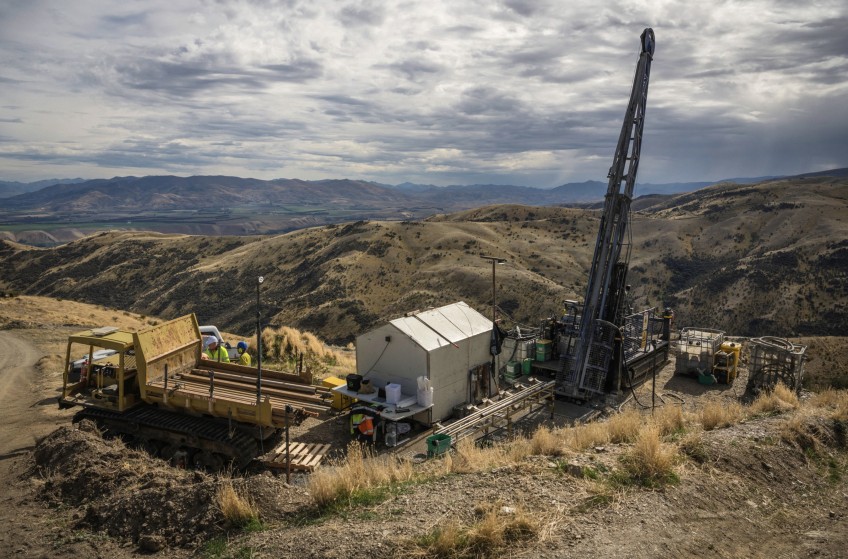
The hopes of Australian company Santana Minerals for a swift passage for their controversial Bendigo mine through the Government’s Fast Track consent process look like being dashed by a solid wall of objections and complaints from virtually every agency involved in the process so far.
In a detailed release of documents from the convener of the Fast Track panel today, Santana comes under fire for slow or non-existent responses to requests for information from the Central Otago District Council (CODC) the Otago Regional Council (ORC) as well as DOC, Heritage NZ and Iwi.
The overall effect of these shortcomings is that it looks likely the mine consent hearing will run for between 120 and 140 days … with even Santana moving their request from 30 to 60 days.
In summary the ORC’s submission to the panel convener claimed:
-
The mine application is substantial in scale and technically complex.
-
There are likely to be a relatively large number of principal issues in contention.
-
The conditions, as drafted, are not accepted by ORC.
-
A timeframe of no less than 140 working days (following receipt of invited comments) is required for the panel to make and issue a decision.
The CODC submission had similar concerns:
-
CODC firmly believes that a significantly extended decision timeframe is required due to the scale and complexity of the proposal and the current state of engagement.
-
CODC supports a decision timeframe of a minimum of 120 working days (rather than 30 working days) from panel commencement. This is necessary to allow adequate time for:
-
Requests for further information and responses.
-
Expert conferencing and/or mediation on key technical issues.
-
Careful drafting, review, and refinement of conditions, including those relying on management plans.
-
Statutory steps involving draft conditions and Ministerial comment.
-
-
A longer timeframe would also mitigate the risk of compromised decision quality or unnecessary challenges.
-
Factors supporting a longer timeframe include:
-
The application and supporting information exceed 9,000 pages, including 44 technical reports and 23 management plans.
-
CODC needs time to engage external planning and technical experts and coordinate their input.
-
There is no clear, shared articulation of agreed versus disputed issues due to limited pre-lodgement engagement.
-
CODC was very clear in stating their disappointment with the way that Santana had responded to information requests.
-
They received presentations and high-level updates, but requests for materials and early access to draft technical documents were not always met.
-
CODC repeatedly sought a description of the proposal, a draft application/AEE, and key technical reports to brief its own experts.
-
Delays occurred due to non-disclosure agreements and confirmation of expert names.
-
Technical documents were released progressively and represented only a subset of the final application.
-
Information provided by the applicant only partially addressed CODC’s requests.
-
Requests for CODC experts to meet or visit the site with the applicant’s experts could not always be accommodated.
-
This limited the extent to which issues could be identified, tested, and narrowed.
The Department of Conservation also was critical of Santana:
-
The Director-General of Conservation (DG) considers the application to lack detail, be substantial, and highly complex.
-
There are novel legal issues, particularly concerning the proposed covenant revocation.
-
Proposed conditions and management plans for concessions and other approvals are not supported by DOC in their current form.
-
A longer timeframe is warranted for the Panel to assess information and advice.
The submission to the convener by Iwi (Kāti Huirapa Rūnaka ki Puketeraki, Te Rūnanga o Moeraki, Te Rūnaka o Ōtākou, and Hokonui Rūnanga (Kā Rūnaka) indicated that there was virtually no way that they could ever support the mine application.
-
Effects on their cultural values or te taiao are incapable of being “offset” or otherwise mitigated; these effects are significant and permanent.
-
Particular concerns arise regarding effects on water, ecology, landscape, and whenua, as well as risks from long-term storage of hazardous substances near land and water, with ongoing risk of serious and irreversible contamination.
-
They have deep and immutable concern regarding the breadth, depth, and timeframe of effects and do not believe the applicant has provided evidence that these effects can be avoided or reduced to an acceptable level for consent under the Fast-track Act.
Sustainable Tarras responds.
A spokesperson for the main group opposed to the Bendigo mine, Sustainable Tarras, supplied the following statement to Crux after reviewing the convenors conference and submissions.
“We are highly concerned but not surprised. The lack of timely and substantive consultation with councils, DOC and Iwi, confirms our own experience over the past two years. Santana has simply paid lip service to our local community.
“Our detailed questions on the project from June 2025 still remain unanswered by Santana.
“Their application overstates the economic benefit and underestimates the environmental impacts. It has major information gaps and conflicting expert opinions that will make this a complex and difficult evaluation.
“The request for a 30 or now 60 day evaluation period is therefore entirely inappropriate and again illustrates the arrogance and intent of the company towards this process and the affected parties.
“They are trying to further minimise the time the invited parties and the panel have to robustly review their application."


TOP STORIES