

QLDC's new building intensification rules - in detail
 Share
Share
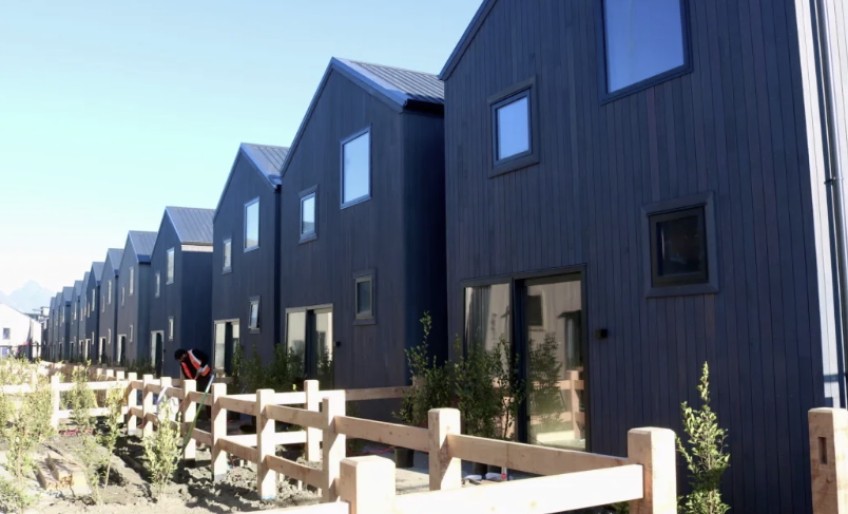
From QLDC.
An Independent Hearing Panel Report and its recommendations for Queenstown Lakes District Council’s (QLDC) proposed Urban Intensification Variation was adopted by Elected Members at the Full Council Meeting on Thursday 5 February 2026.
QLDC General Manager Planning & Development, David Wallace said that the Variation, and intensification generally, involves allowing denser housing in areas and enabling infrastructure to service those developments in a more efficient and affordable manner to the ratepayer.
“Intensification allows for more houses of different types and provides people with the ability to live closer to the local services, community facilities, and commercial activities they need; whether that’s health providers, schools and shops, or libraries, parks, and playgrounds,” said Mr Wallace.
“Enabling density in appropriate locations as opposed to urban sprawl helps to reduce the need for people to travel, sometimes over long distances to reach their destination of choice, and it can have a significant impact on the overarching wellbeing of our community.”
The Variation gives effect to central government’s Policy 5 of the National Policy Statement on Urban Development (NPS-UD), while also supporting broader objectives of achieving well-functioning urban environments and enabling development capacity to meet expected demand.
The adopted Urban Intensification Variation includes a refined approach to height and density across the district from recommendations made by the Independent Hearing Panel, following detailed analysis of evidence and submissions made by numerous parties across the district.
Some of the key decisions as part of the recommendations include:
- The Lower Density Suburban Residential Zone (LDRZ) will be renamed Suburban Residential Zone (SRZ) and will enable more flexible two‑storey infill housing by increasing current permitted heights from 6.5m or 7m currently to 8m.
- The Medium Density Residential Zone (MDRZ) will be retained, but a new zone called Medium Density Residential A Zone (MDRAZ) will be introduced where greater height and density will be enabled.
- Greater heights and density will be enabled in locations near central Queenstown and on generally greenfield land in Wānaka South, increasing current permitted heights from 8m to 11m and removing density requirements of one residential unit per 250m2 net site area.
- Similarly, the High Density Residential Zone (HDRZ) will be retained, with a new zone called High Density Residential A Zone (HDRAZ) also introduced to allow for greater height and density near Queenstown town centre and Three Parks, Wānaka.
- The new HDRAZ will allow for building height of 16.5m and a tiered approach for any building greater than 24m to be discretionary activity.
- Lower building heights than what was initially proposed will apply in Arrowtown in the MDRZ and SRZ, retaining the predominantly 1-2 storey character of these areas. Current references to the Arrowtown Design Guidelines 2016 in these zones will be removed and replaced with matters of discretion that enable consideration of Arrowtown’s existing character.
- Existing zones and lower height limits in smaller settlements like Hāwea and Arthurs Point will largely be retained.
- In some zones across the district, references to existing design guidelines will be removed, as these no longer align with the updated height and density provisions, and new rules for vehicle loading areas in residential zones will be introduced.
The decision follows a comprehensive formal submissions process which first began in August 2023, followed by hearings held in Arrowtown, Queenstown, and Wānaka in July and August 2025.
In total, 1,274 submissions were made on the proposed Urban Intensification Variation, along with 108 further submissions, altogether resulting in over 7,000 submission points for the Independent Hearing Panel to consider.
Following adoption of the Panel Report, Council staff will now publicly notify the decision and alter Proposed District Plan provisions to reflect the Report’s recommendations and to correct minor errors.
As required by the Resource Management Act (RMA), there will be a 30-working day period where appeals can be lodged to the Environment Court from the date of public notification of the decision. Any provisions not subject to appeals will then be treated as operative following the appeal period.
The Panel’s recommendation report, revised chapter provisions, and maps of the changes can all be viewed on QLDC’s website at https://www.qldc.govt.nz/your-council/council-meetings/5-february-2026-full-council-meeting/.


TOP STORIES